About Thunderstorm Therapy
Why this practice exists, and what it's here to do
Thunderstorm Therapy is a private practice in San Antonio's Southtown neighborhood, founded on the belief that good therapy should feel like a real conversation. Not a performance, not a checklist, and not a clinical procedure.
The name comes from something simple: storms are uncomfortable, but they pass. And sometimes the most important thing you can do is stop running from the weather and learn how to stand in it. That's what this work is really about.
The practice focuses on children, adolescents, families, and couples, though adults navigating all kinds of challenges are welcome too. A particular emphasis is placed on youth, because young people are often navigating more than most adults give them credit for, and they deserve a space where they're treated as whole people, not just problems to be managed.
Services are available in person at the Southtown office and via telehealth for clients anywhere in Texas.
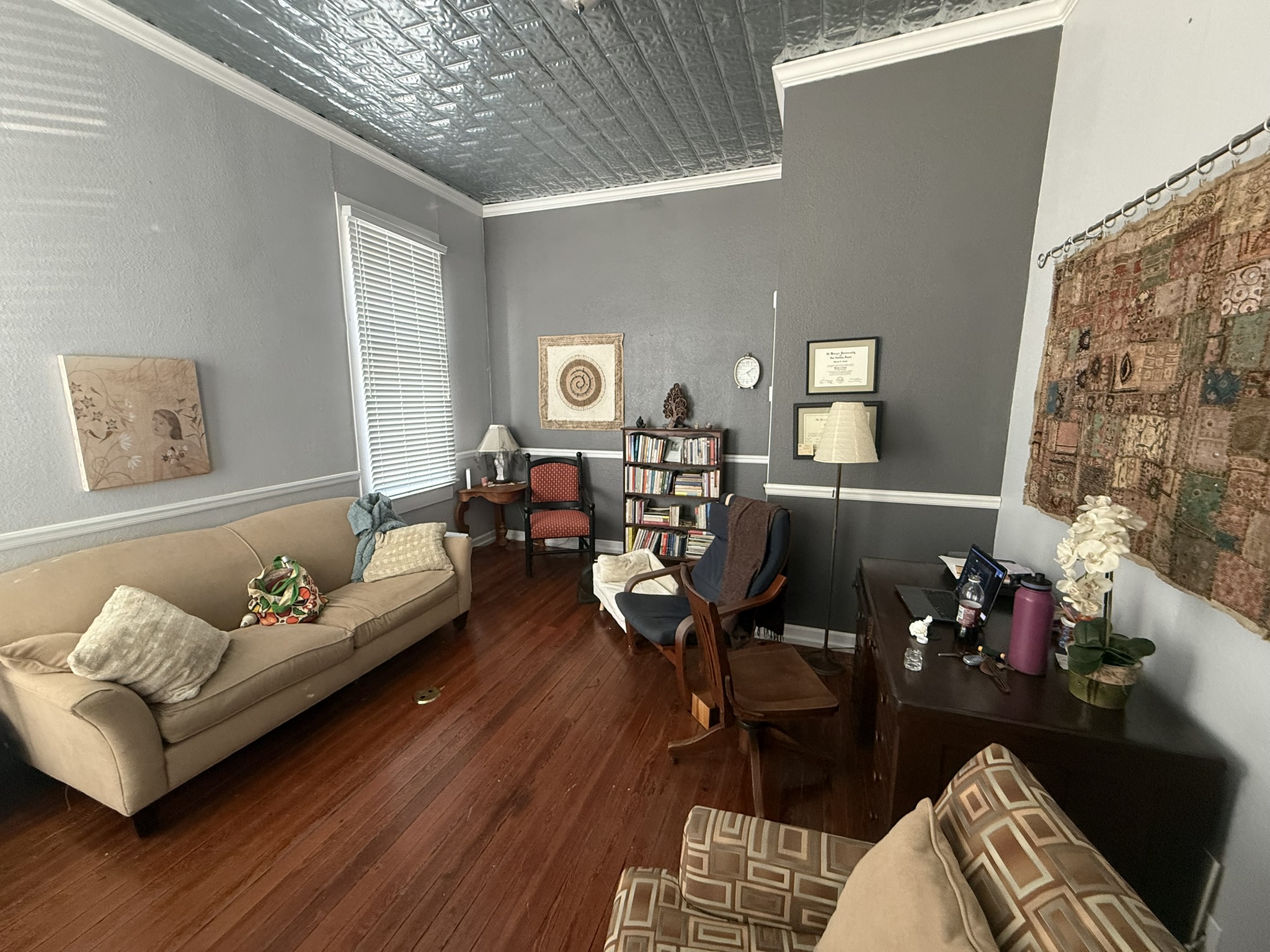
The office: warm, unhurried, and nothing like a waiting room.
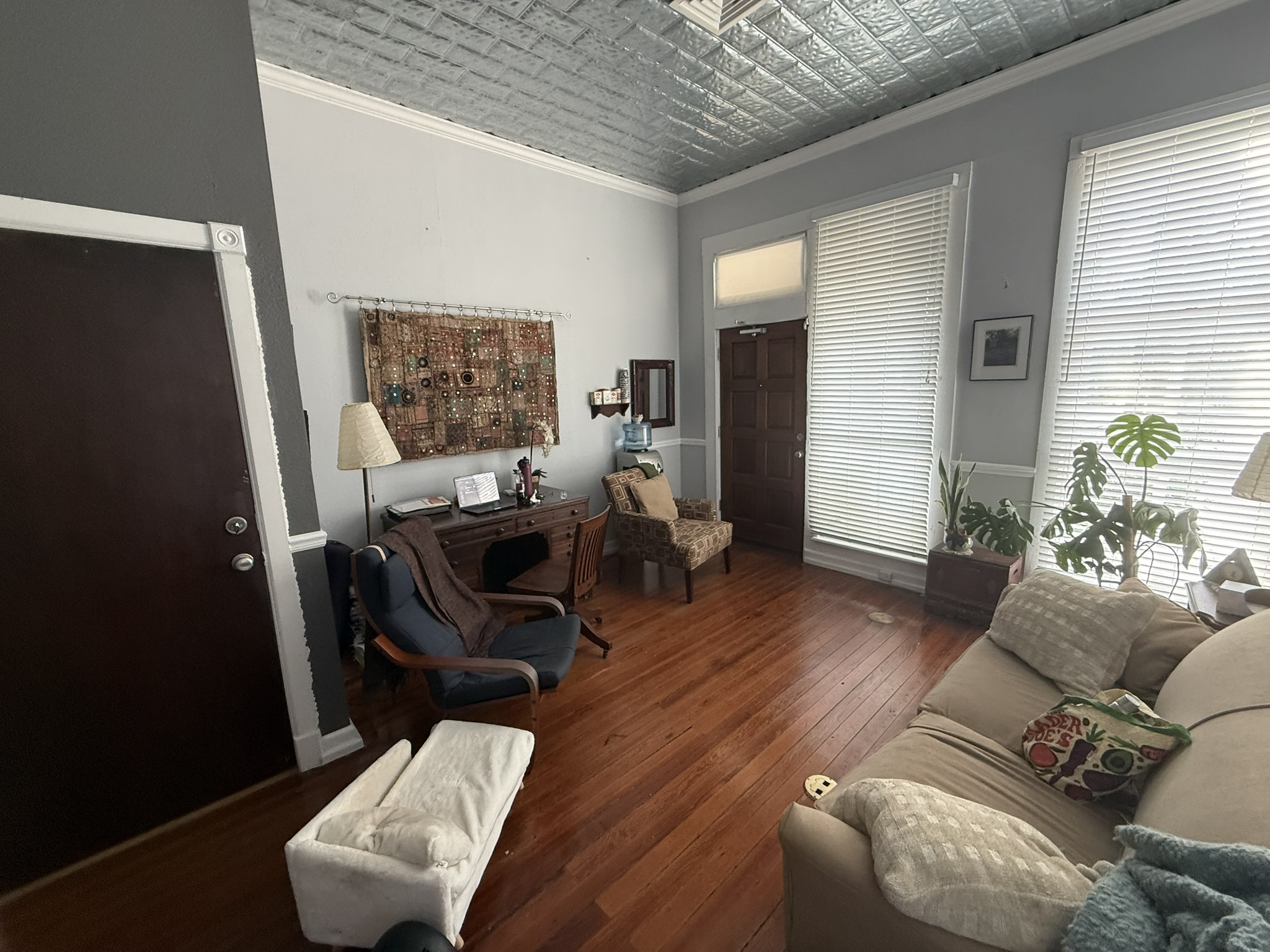
628 South Presa Street, Southtown.
Our Approach
This practice draws heavily from Relational-Cultural Therapy (RCT), a framework that understands human wellbeing through the quality of our connections with others. The premise is simple: most of what hurts us happens in relationships, and most of what heals us does too. That shapes everything about how sessions are run.
That relational foundation gets woven together with Cognitive Behavioral Therapy (CBT), existential and narrative approaches, Internal Family Systems (IFS), mindfulness, and trauma-informed care, depending entirely on what you actually need. The framework follows the person, not the other way around.
For younger clients, that often means play therapy, creative expression, or finding ways into difficult emotions through story and metaphor. For teens, it means honest conversation without the feeling of being managed. For adults and couples, it means showing up for the work the same way I ask you to, with directness, care, and a willingness to go where things actually lead.
Areas of focus
Therapeutic approaches
Staff
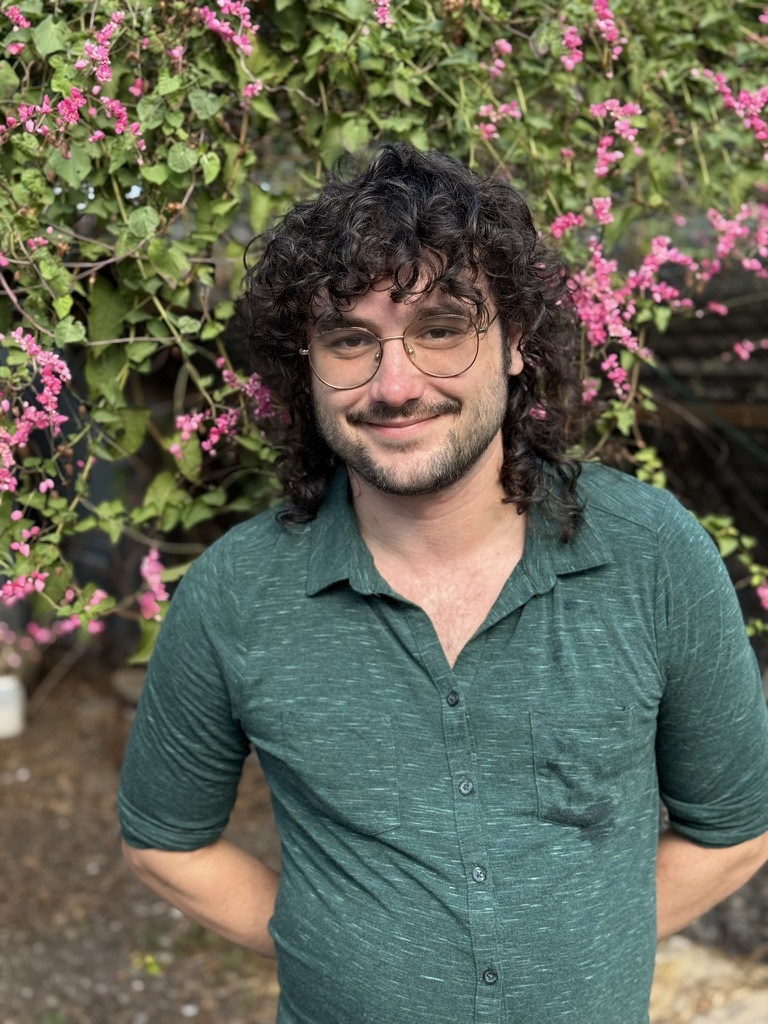
Joseph Middleton
Licensed Professional Counselor Associate
View Joseph’s Psychology Today profile
I grew up in San Antonio and came back to serve the community I know best. I live in Southtown with my partner and our two cats, which probably tells you something about how I spend my time when I'm not working. Things like building backyard koi ponds from scratch, creating water features, landscaping, building and maintaining home media systems to share with my family, and generally finding ways to make things with my hands.
My path to becoming a therapist wasn't a straight line. I studied film and performance at UT Austin, spent nearly a decade training in Meisner technique, and somewhere in that process started understanding human connection differently: what it actually means to see someone, read what they're carrying, and respond from a real place rather than a rehearsed one. That understanding is still at the center of how I work.
I hold a Master of Science in Clinical Mental Health Counseling from the University of Houston–Clear Lake.
The clients who tend to get the most out of working with me are the ones who've never quite felt understood, whether that be by their family, their school, their previous therapists, or the world in general. Kids who feel like adults don't actually remember what it's like to be a kid. Teenagers who are tired of being managed. Adults who've been through systems that processed them without knowing them. Neurodivergent people who are used to being seen as a problem to solve. People carrying questions about identity, sexuality, gender, race, or belonging that they weren't sure they could bring to just anyone.
I have a personal understanding of what it means to think differently, and I work from that understanding, not around it. My approach with ADHD and autism isn't about getting clients to seem more neurotypical. It's about understanding how their brains actually work and building from there.
Therapy with me isn't clinical in the cold sense of the word. I'm not behind glass. I have a personality and I bring it. Sessions don't follow a script. They follow you. I'm direct when directness is useful, patient when patience is what's needed, and honest even when the honest thing isn't what you were hoping to hear. I won't push you to talk before you're ready, but I won't let you stay comfortable when staying comfortable is what's keeping you stuck either.
I work with children, adolescents, adults, couples, and families. One thing I'm particularly good at is moving fluidly between different members of a family in the same session: holding the whole picture, translating between people who love each other but can't quite reach each other, and helping everyone leave the room feeling like something actually moved. This skill helps with my individual children and adolescent clients as well because it can improve communication between them and their families in my discussions with parents and others before and after sessions.

Casper, doing what Casper does.
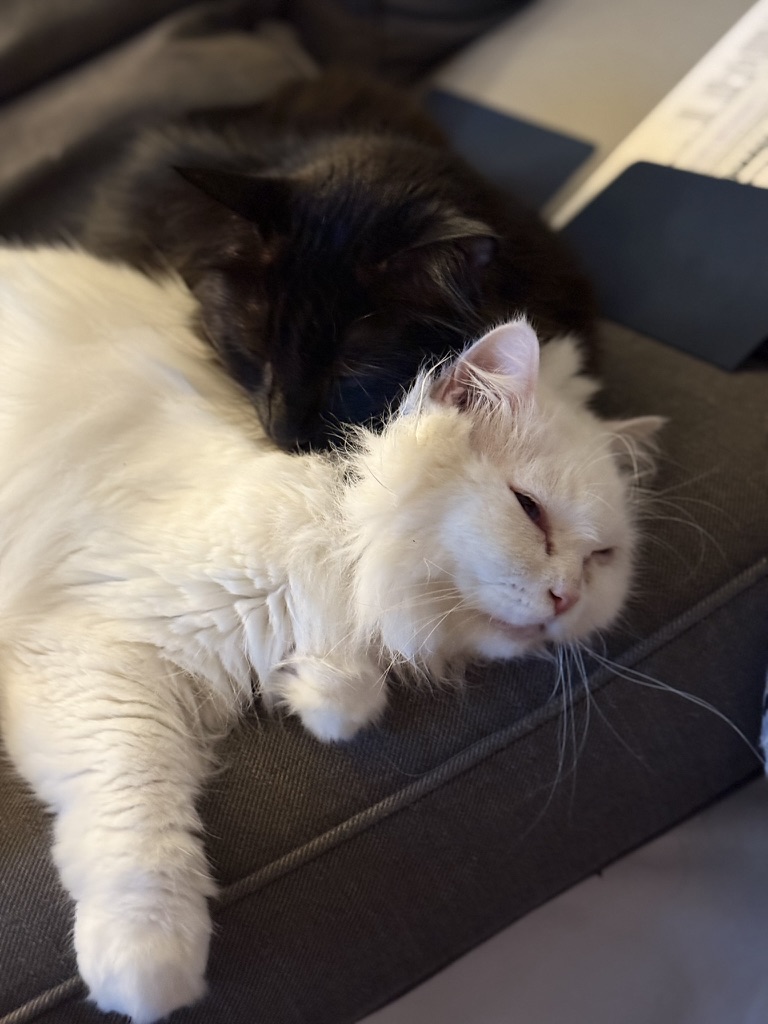
Binx & Casper.
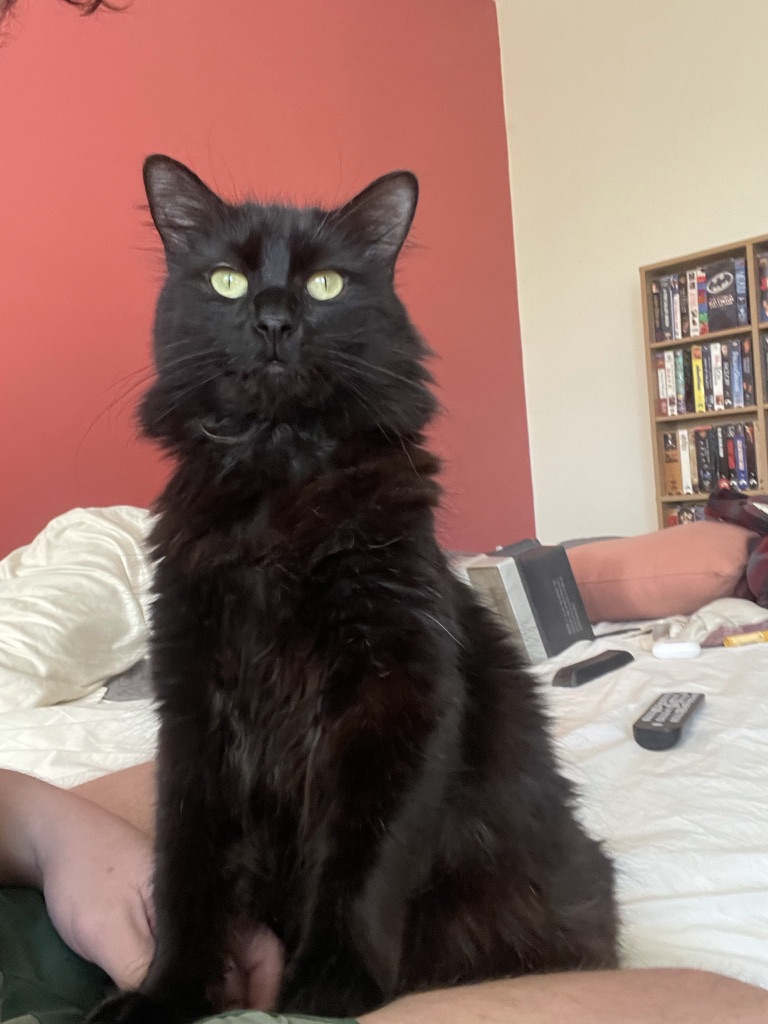
Binx, holding court.